




WITH seven years to go, the Philippines is in danger of not meeting all the targets that have been set for countries to provide “Education for All” by 2015.
“Education for All by 2015 – Will we make it?”, a midterm review of progress across the six EFA goals released recently by the United Nations Educational, Scientific and Cultural Organization or UNESCO, said the country is “at risk” of not achieving the goals on adult literacy andgender parity.
WHEN public high school sophomores get the new Social Studies textbook next week, they will be holding in their hands what could be a source of a diplomatic irritant:The book mentions Taiwan as a “country” separate from the People’s Republic of China, in violation of the one-China policy the Philippine government upholds.
The error apparently went unnoticed by its authors—17 professors from the University of the Philippines, some of them with Ph.Ds—and the Department of Education, a government entity supposedly conscious of the one-China policy.
THE delivery of textbooks from the Department of Education in Manila to far-flung areas is usually a boring and mundane obligation.
But come July, select communities in remote areas will be welcoming the arrival of textbooks with celebrations resembling town fiestas, complete with dances and décor.
THERE IS perhaps no lawmaker as enthusiastic about biofuels as Sen. Juan Miguel Zubiri.
Zubiri was still congressman for the third district of Bukidnon when he became principal author of the House bill that eventually became Republic Act 9367 or the Biofuels Act. He campaigned hard to get other lawmakers to support the measure that he earned himself the nickname “Mr. Biofuel.” His official page in the Senate website describes him as the “father of the Biofuels Act of 2006.”
WHILE ORDINARY Filipinos face the threat of food shortages caused by dwindling agricultural land, sugar barons in Congress are preoccupied turning their vast haciendas and other lands into plantations to produce and process biofuels.
One of those engaged in this move is presidential brother-in-law Ignacio “Iggy” Arroyo who hurdled last month most of the government requirements needed to convert his family’s 157-hectare Hacienda Bacan in Isabela, Negros Occidental into agro-industrial uses, mainly for the production of ethanol.
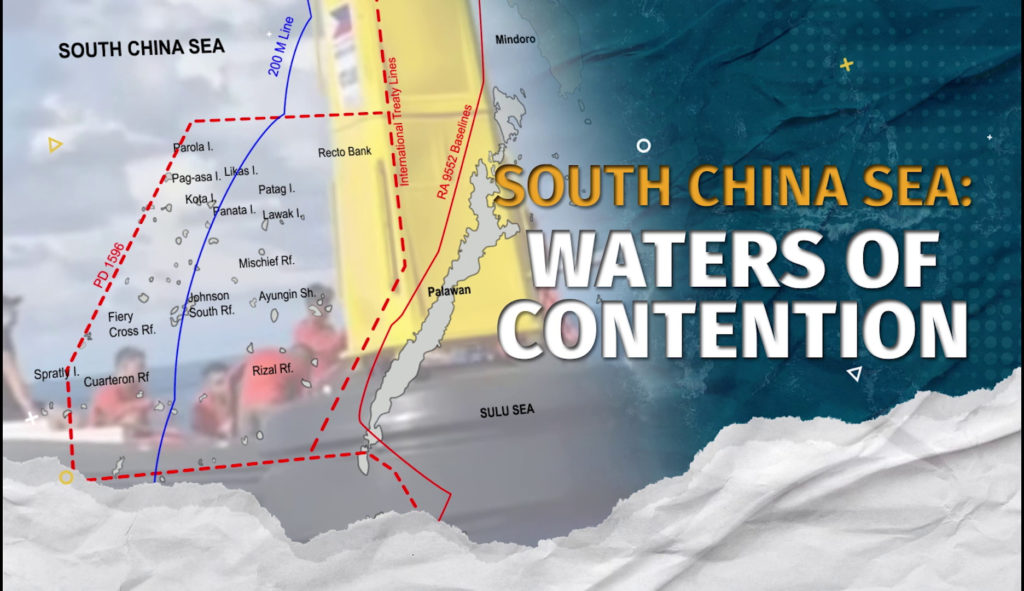
NEGLECT by President Gloria Arroyo and squabbles over turf and money have derailed government efforts to establish the country's new archipelagic baseline, and may jeopardize the Philippines' claim over resource-rich Spratlys that fall within its extended continental shelf.
With a year left before the May 13, 2009 deadline for filing its claim for an extended continental shelf under the United Nations Convention on the Law of the Sea (UNCLOS), the Philippines is nowhere near completing the studies, surveys and report required to bolster the country’s claim over its extended territory.
FORMER Vice President Teofisto Guingona will launch tonight his book, “Fight for the Filipino,” in which he reveals the reasons for his disillusionment with and eventual breakaway from President Gloria Macapagal–Arroyo, including her supposed order to then Justice Secretary Hernando Perez to approve the $470 million controversial agreement with the Argentinian power firm IMPSA (Industrias Melaurgicas Pescarmona Socieda Anonima).
THE U.S. State Department is urging the Philippine government to improve its record of prosecuting, convicting and punishing human traffickers.
The State Department said in its “2008 Trafficking in Persons Report” released last month that while the Philippines demonstrated “exemplary efforts” to prevent cross-border trafficking and protect victims, it “demonstrated weak efforts to prosecute trafficking cases and convict trafficking offenders.”
A BATANGAS court sentenced to life imprisonment on June 30 a woman who had recruited two minors with the intention of making them sex workers in Puerto Galera, in what antitrafficking NGOs hailed as a "landmark conviction."
Judge Florencio Arellano also ordered the female trafficker to pay P2 million in fine and P50,000 in moral damages to each of the victims after finding her guilty of qualified trafficking under Republic Act No. 9208 or the Anti-Trafficking in Persons Act of 2003.
THE Bangkok-based Southeast Asian Press Alliance has joined the growing outcry against the dismissal of class action suit filed by Filipino journalists who were arrested while covering last November’s standoff at the Manila Peninsula Hotel.
The coalition of press freedom advocacy groups in Southeast Asia said in a statement said the June 20 decision of Makati Judge Reynaldo Laigo declaring as lawful the arrests, handcuffing and “processing” of the journalists “immediately brings uncertainty and danger to media practitioners in future urgencies--uncertainty and danger not from the inherent risks of emergencies, but from the mandate that police and the government have granted themselves (now with court backing) to dictate what would be out of bounds for news coverage.”
TWO leading newspapers assailed today the decision of a Makati court junking the P10 million class action suit filed by journalists arrested while covering the Nov. 29 standoff at the Peninsula Manila Hotel.
The Philippine Daily Inquirer in an editorial described the decision of Judge Reynaldo Laigo as "a terrible mistake."
A MAKATI regional trial court has dismissed the P10 million class action suit filed by journalists arrested while covering the Nov. 29 standoff led by Sen. Antonio Trillanes IV and Brig. Gen. Danilo Lim at the posh Peninsula Manila Hotel.
Judge Reynaldo Laigo said the police order for journalists and other civilians then inside the Manila Peninsula to leave the hotel was "lawful" considering the "dangerous situation" at the time.